
A quick ab workout at home can be done in 10 minutes with no equipment using four moves: dead bug, bird dog, forearm plank, and side plank for two rounds. Done slowly, that circuit trains the front, sides, and deep muscles of your trunk, not just the muscles you feel during crunches.
You need floor space about the length of your body and a surface comfortable enough for kneeling and lying on your back. After reading, you will know how to do each move with steady form, how to make it easier or harder, and how often to repeat it during the week.
What Your Core Actually Does, and Why Crunches Alone Miss Part of It
Your core is the group of muscles around your abdomen, sides, back, pelvis, and hips that helps you stay steady when you move. The rectus abdominis is the muscle down the front, but the obliques on the sides, the transverse abdominis deep in the trunk, and the back muscles also do real work.
Crunches mainly bend the spine forward. Daily movement also asks you to resist bending, resist twisting, and stay stable while your arms and legs move, which is why this routine mixes holds and slow limb movements.
A balanced short routine should train you to brace, not just to bend. That is the reason for using dead bug and bird dog alongside planks. The ACE guide to core movements for beginners uses the same basic pattern: keep the spine in a steady position while the opposite arm and leg move.
Before You Start: Space, Form Checks, and Safety
You need a mat or carpet, a small amount of floor space, and clothing that lets you bend your hips and knees freely. Start on a day when you are not already sore from hard trunk or full-body training, because tired muscles make it harder to notice form errors.
Check two positions before the timer starts. Lying on your back, you should be able to breathe out slowly and feel your ribs lower without pain. On all fours, you should be able to keep your back flat without your wrists or knees hurting. If either position is painful, use the easier options below or skip that move.
This workout is for generally healthy adults. If you are pregnant or recently postpartum, have a hernia, recent abdominal or back surgery, or ongoing back pain, check with a clinician or physical therapist before doing planks and dead bugs. Stop and seek advice if you feel sharp pain, numbness, dizziness, or pain that spreads down a leg. This article is general information, not personal medical advice.
The 10-Minute Quick Ab Workout at Home
Do two rounds of the four moves below. Move slowly between exercises, and use the transition time as your rest. If you need more rest, take it and let the workout run to 11 or 12 minutes, because clean form matters more than the clock.
| Exercise | Work per round | Main focus |
|---|---|---|
| Dead bug | 6 to 8 slow reps per side | Front and deep trunk control |
| Bird dog | 6 to 8 slow reps per side | Back, trunk, and balance |
| Forearm plank | 20 to 40 seconds | Front and shoulder stability |
| Side plank | 15 to 30 seconds per side | Sides of the trunk |
Two slow rounds beat one rushed round. Speed often turns ab work into hip and neck work, which changes what you are training.
Dead bug
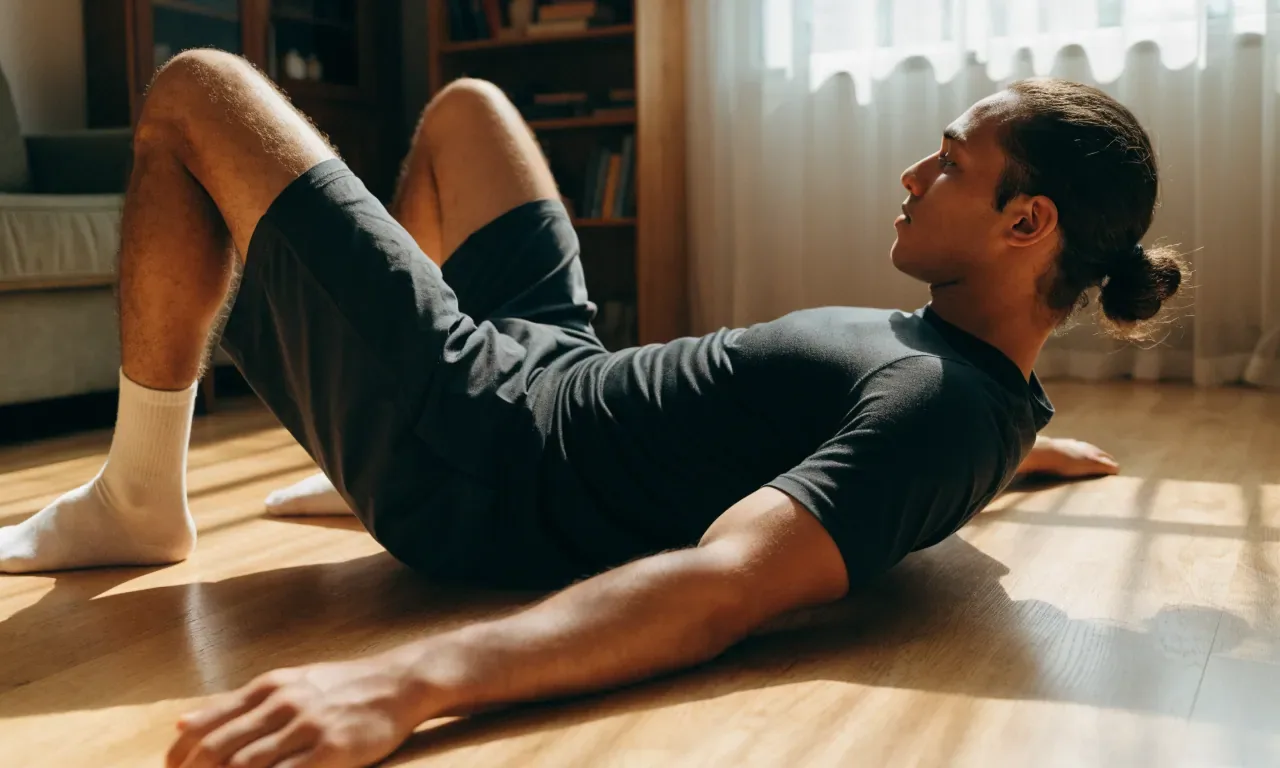
Lie on your back with your arms pointing up and your hips and knees bent at about 90 degrees. Breathe out and gently press your lower back toward the floor without holding your breath.
Lower your right arm and left leg slowly toward the floor at the same time. Stop before your back arches or your ribs lift, then return to the start and switch sides. The range can be small at first, and a small range with control is the correct starting point for many beginners.
Bird dog
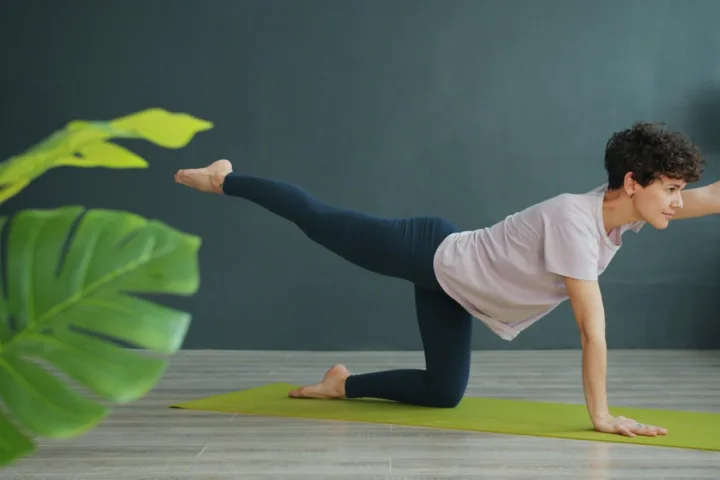
Start on all fours with your hands under your shoulders and your knees under your hips. Brace your trunk as if you are about to be nudged from the side.
Reach your right leg back and your left arm forward until they are roughly in line with your trunk. Do not lift them above hip and shoulder height, because higher lifting often causes the back to arch. Pause for one to two seconds, return slowly, and switch sides. The ACE guide to core movements for beginners makes the same point about keeping the spine steady and the limbs at or below hip height.
Forearm plank
Place your forearms on the floor with your elbows under your shoulders and step your feet back. Form a straight line from your head to your heels, squeeze your glutes lightly, and breathe steadily.
If your hips sag, your lower back aches, or you have to hold your breath, end the set. Drop to your knees for the rest of the hold, because a shorter knee plank with a straight line trains the same position at a level you can control.
Side plank
Lie on one side with your forearm under your shoulder and your feet stacked, or stagger your feet for more balance. Lift your hips so your body forms a straight line from head to feet.
Keep your top hand on your hip or reach it upward, whichever helps you stay steady. Lower with control, then repeat on the other side. Bend your knees and lift from the knees if the full version is too hard or your shoulder cannot stay comfortable.
Your Week at a Glance
Do this routine on two or three non-consecutive days per week to start. That spacing gives the muscles time to recover and fits the wider activity pattern recommended for adults.
According to the WHO physical activity recommendations, adults should do at least 150 to 300 minutes of moderate-intensity aerobic activity per week, or 75 to 150 minutes of vigorous activity, plus muscle-strengthening activities on two or more days a week. The CDC guide to adding physical activity as an adult gives the same adult targets: 150 minutes a week and two days of muscle strengthening.
| Day | Plan |
|---|---|
| Monday | Quick ab workout, 10 minutes |
| Tuesday | Walk or other aerobic activity |
| Wednesday | Quick ab workout, 10 minutes |
| Thursday | Walk or other aerobic activity, or rest |
| Friday | Optional third session if you are not sore |
| Weekend | Aerobic activity you enjoy, plus rest |
This workout is only one part of that weekly total. It does not replace walking, other aerobic activity, or training for the legs, hips, back, chest, and arms. Use it as the trunk portion of a broader routine.
How to Make It Easier or Harder in the Same 10 Minutes
Choose the version you can do with steady breathing and no back arching, then change one variable at a time. Changing every exercise at once makes it hard to tell what caused soreness or a form breakdown.
To make it easier:
- Do dead bug with one limb at a time, starting with heel taps only
- Do bird dog with the leg only, keeping both hands down
- Use knee plank and knee side plank
- Do one round instead of two for the first week
To make it harder:
- Slow each dead bug and bird dog rep to a three-second lowering phase
- Add a two-second pause at the end range of each rep
- Extend plank holds by five to ten seconds while form stays clean
- Add a third round and drop the 10-minute label for that day
Progress when the last two reps look like the first two. If your form changes early in a set, you have progressed too fast for that day.
Mistakes That Waste a Short Workout
The most common error is rushing to finish inside 10 minutes. Fast reps use momentum, shorten the time the trunk has to work, and often pull the work into the hip flexors at the front of the thighs.
Watch for these problems:
- Holding your breath: you should be able to breathe out slowly during effort, not brace by trapping air for a whole set
- Letting the back arch in dead bug: shorten the leg reach or bend the knee more
- Cranking the neck in plank: look at the floor a few inches ahead of your hands and keep your head in line with your back
- Rolling forward in side plank: stack your ribs over your pelvis and move your forearm slightly forward if you keep tipping
- Training through sharp pain: muscle effort and shaking can be normal, sharp or spreading pain is a reason to stop
Film one set from the side if you train alone. A short video often shows hip sag or back arch that you cannot feel while you are working.
Will Ab Training Reduce Belly Fat on Its Own?
No. Ab training strengthens and builds endurance in the muscles you train, but it should not be presented as a stand-alone way to remove fat from the belly.
A systematic review and meta-analysis of randomized trials on exercise and subcutaneous abdominal fat found that aerobic training, resistance training, and combined training were linked to reductions in subcutaneous abdominal fat across the programs studied. That is a finding about overall exercise programs, not proof that one ab move removes fat from the spot above it.
Think of this routine as strength work for the trunk. If your goal includes fat loss, the ab workout needs to sit alongside regular aerobic activity, full-body strength work, sleep, and eating habits you can sustain. Visible definition, if it comes, follows changes in overall body composition and varies a lot between people, so it should never be promised on a timeline.
Quick Ab Questions, Answered Straight
How often should I do this workout?
Start with two days per week, then add a third non-consecutive day if you recover well. Your trunk muscles also work during many other exercises, so daily hard ab training is not needed for most people and can leave you too sore to keep good form.
Can I do this every morning as a warm-up?
You can do an easier one-round version as movement practice if it does not cause pain or leave you fatigued. Keep the full two-round version for your planned training days, because a warm-up should prepare you for activity, not exhaust the muscles you need later.
What if I feel it mostly in my hip flexors or neck?
Shorten the movement and slow down first. In dead bug, keep the knees more bent and lower the heel only partway. In plank, check that your head is not lifted and your hips are not sagging, because both errors can shift work away from the trunk.
Do I need to warm up for a 10-minute session?
A brief warm-up helps, even if it is only one minute of marching in place, easy hip hinges, and a few slow heel taps. Cold, rushed first reps are harder to control, so spend the first round moving a little more conservatively than you think you need to.
When should I expect to feel stronger?
Judge progress by control first: longer clean holds, slower reps without your back arching, and needing fewer extra rests. Strength changes are gradual and differ between people, so track what you can do with good form rather than expecting a visible change by a set date.
Related Home Workouts
How This Guide Was Put Together
This guide is based on the WHO 2020 physical activity guidelines as summarized in the WHO fact sheet, the current CDC adult activity recommendations, and the ACE exercise instructions and research linked above. It does not claim personal testing, expert review, or results from any individual reader.
Sources
- World Health Organization, Physical activity
- Centers for Disease Control and Prevention, Adding Physical Activity as an Adult
- American Council on Exercise, 4 Core Movements for Beginners
- Yarizadeh H. et al., The Effect of Aerobic and Resistance Training and Combined Exercise Modalities on Subcutaneous Abdominal Fat: A Systematic Review and Meta-analysis of Randomized Clinical Trials, Advances in Nutrition, 2021