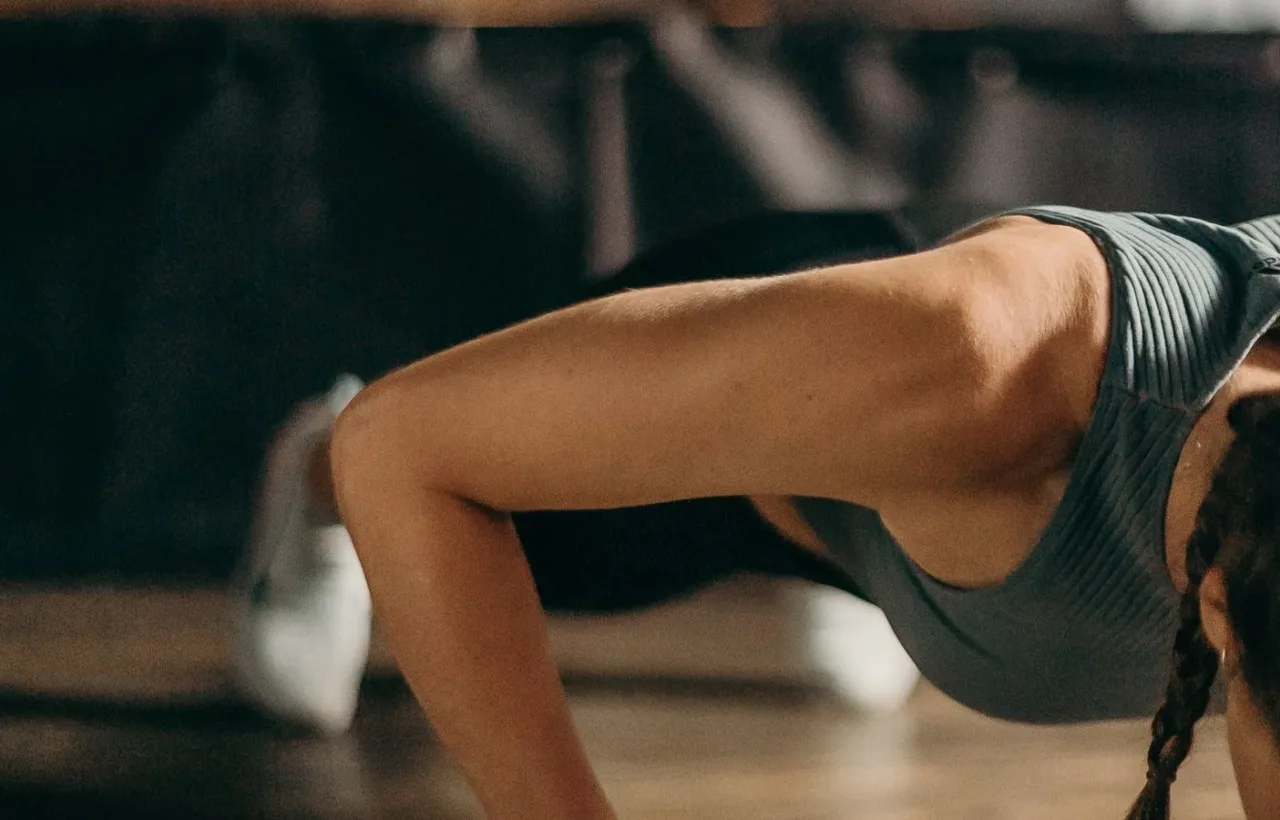

A core workout at home with weights works best when you train your trunk to resist unwanted movement, not just to do repeated crunches. Use one dumbbell, kettlebell, or weight plate, choose four to six controlled exercises, and train for 15 to 25 minutes two or three times a week.
That structure lets you practise bracing, carrying, and controlled rotation with a load you can manage. Below you will find how to choose a starting weight, clear form cues for seven exercises, and two repeatable sessions you can progress over time.
What Counts as Core Training When You Add Weight?
The core is the group of muscles around your trunk and pelvis, including the rectus abdominis at the front, the obliques at the sides, the transverse abdominis deep in the abdomen, the muscles along the spine, the diaphragm, and the pelvic floor. The glutes and lats also help control the pelvis and ribs during many core exercises.
Weighted core training is mainly about resisting movement while your arms or legs move. A dead bug trains you to stop your lower back arching, a suitcase carry trains you to stop leaning sideways, and a pull-through trains you to stop rotating. Controlled flexion and rotation still have a place, but they should not be the whole session.
What Weight Should You Start With?
Start with a weight that lets you keep your ribs down, breathe, and stop exactly where you intend to stop. If you have to hold your breath for the whole set, swing the weight, or let your lower back arch to finish a rep, the weight is too heavy for that exercise.
Different tools suit different moves. Choose based on what you own and what you can grip safely.
| Equipment | Best for | Choose this if | Watch out for |
|---|---|---|---|
| Dumbbell | Dead bugs, pull-throughs, suitcase work, marches | You want the most versatile single option | Rounded ends can roll in a pull-through, so move slowly |
| Kettlebell | Carries, suitcase deadlifts, goblet marches | You prefer a handle that hangs below the hand | The bell can tilt into the forearm on goblet holds |
| Weight plate | Dead bugs, halos, short holds | You have plates but no dumbbells | Smooth plates are harder to grip when hands are sweaty |
| Filled backpack | Carries, marches, holds | You have no formal weights and the load is packed tight | Loose items shift, which makes the exercise harder to control |
As a practical starting point, many beginners can test dead bugs and chops with 5 to 10 lb (2 to 5 kg), and carries or suitcase deadlifts with 10 to 25 lb (5 to 11 kg). These are starting tests, not targets. Use the lightest option first, complete one set with good form, then decide.
A Safety Check Before You Start
This weighted plan is for healthy adults who can get down to the floor and back up without pain. If you are pregnant or recently postpartum, have a hernia, recent surgery, uncontrolled blood pressure, or ongoing back, neck, or pelvic pain, get advice from a clinician or physiotherapist before adding load. Stop an exercise if you feel sharp pain, numbness, dizziness, or pressure symptoms, and do not train through pain that changes how you move.
Work on a firm surface with clear space around you, and keep spare weights out of the path of a carry. Wear shoes with a firm sole for standing work, or go barefoot on a non-slip floor if that feels more stable.
The Form Rules That Make a Core Workout at Home With Weights Work
Bracing is tightening the muscles around your trunk to make your ribs and pelvis work as one unit. Think about tightening as if you are about to cough, then breathe behind that tension. Your lower back should feel supported, not forced flat or strongly arched.
Exhale on the hardest part of the rep to help keep pressure and position under control. For a dead bug, exhale as you lower the arm and leg. For a carry, take short, steady breaths while you walk.
Use a slow tempo for most floor exercises, about two to three seconds out and two seconds back. Speed hides mistakes. A slower rep shows you whether your hips are shifting, your ribs are flaring, or the weight is pulling you out of position.
7 Exercises for a Stronger, More Controlled Core
Pick four to six of these for one session, rather than doing all seven hard on the same day. Match the exercise to the pattern you want to train.
1. Weighted dead bug
This is an anti-extension exercise, which means the goal is to stop your lower back arching as your limbs move.
- Lie on your back holding one light dumbbell or plate with both hands above your chest. Bend your hips and knees to about 90 degrees.
- Exhale and gently press your lower back toward the floor.
- Lower your right arm and left leg toward the floor for two to three seconds, keeping the weight steady.
- Return to the start and repeat on the other side.
Do 2 to 3 sets of 6 to 8 reps per side. Make it easier by keeping the weight still and moving only one leg. The common mistake is letting the ribs lift and the back arch as the leg gets lower, so shorten the range until you can stop that happening.
2. Dumbbell plank pull-through
This trains anti-rotation because your trunk has to stay still while one arm moves a weight across the floor.
- Start in a high plank with a dumbbell just outside your right hand. Place your feet a little wider than hip-width.
- Brace and reach your left hand under your chest to drag the dumbbell to the left side.
- Place the left hand back down without dropping your hips.
- Repeat with the right hand pulling the weight back.
Do 2 to 3 sets of 5 to 7 reps per side. Keep the drag slow and close to the floor. If your hips rock side to side, widen your feet, use a lighter weight, or replace this with a weighted dead bug.
3. Suitcase carry
A suitcase carry is holding a weight in one hand, like a heavy bag, while you walk without leaning. It trains anti-lateral flexion, which means resisting bending sideways.
- Hold a dumbbell or kettlebell in one hand by your side.
- Stand tall with both shoulders level and your ribs stacked over your pelvis.
- Walk slowly for 20 to 40 seconds, keeping your torso upright.
- Rest, then repeat on the other side.
Do 2 to 4 carries per side. If you have very little space, march on the spot for the same time, lifting your knees to a comfortable height. Choose a heavier weight here than for a dead bug, but not one that makes you lean away from it.
4. Suitcase deadlift
This is a hip hinge with a weight in one hand. Your core works to stop you bending or rotating toward the loaded side while your glutes and hamstrings lift the weight.
- Stand with a dumbbell beside your right foot, feet hip-width apart.
- Push your hips back, bend your knees slightly, and grip the weight with a flat back.
- Stand up by pushing the floor away and squeezing your glutes.
- Lower the weight with control to the same spot.
Do 2 to 3 sets of 6 to 10 reps per side. Keep the weight close to your leg. If you feel this mainly in your lower back, reduce the weight, push the hips back less far, or raise the weight on a sturdy step or stack of books to shorten the range.
5. Half-kneeling dumbbell wood chop
This teaches controlled rotation. The movement comes from your trunk turning as a unit, not from twisting hard through your lower back.
- Kneel on your right knee with your left foot in front, both knees at about 90 degrees. Hold a light dumbbell with both hands beside your right hip.
- Brace your glutes and exhale as you lift the weight diagonally across your body toward your left shoulder.
- Keep your hips facing forward and move slowly.
- Return along the same path.
Do 2 to 3 sets of 6 to 8 reps per side. Start lighter than you expect, because the long lever makes a small weight feel heavier. Stop the upward movement if your front knee caves in or your lower back starts to twist sharply.
6. Dumbbell halo
A halo circles a weight around your head while your trunk stays still. It links shoulder control with anti-extension and anti-rotation work.
- Stand tall or half-kneel, holding a light dumbbell or kettlebell by the sides of the handle at chest height.
- Brace and tuck your ribs down slightly.
- Circle the weight slowly around your head, ducking your head a little as it passes behind you.
- Complete the circle without leaning back, then reverse direction after the set number of reps.
Do 2 sets of 5 circles each way. Use a very light weight at first, and skip this exercise if circling a weight overhead causes shoulder, neck, or elbow pain. A dead bug or carry will train a similar bracing skill with less demand on the shoulders.
7. Goblet march
This is a standing hold combined with a slow march. It is useful at home because it needs almost no floor space.
- Hold a dumbbell vertically at your chest with both hands under one end, or hold a kettlebell by the handle at chest height.
- Stand tall with your elbows pointing down.
- March slowly for 20 to 40 seconds, keeping the weight still and your torso upright.
- Lower your foot quietly on each step.
Do 2 to 3 sets. The weight should make you work to stay tall, not pull you forward. If your lower back arches as you lift your knees, lower the knee height and reduce the weight.
Two Ready-to-Use Sessions
Do the shorter session when you are learning the moves or adding core work to the end of another workout. Do the longer session as a standalone workout after a five-minute warm-up of easy walking, hip hinges with no weight, and bodyweight dead bugs.
| Exercise | Session A: 15 minutes | Session B: 25 minutes | Rest |
|---|---|---|---|
| Weighted dead bug | 2 x 6 per side | 3 x 8 per side | 45 to 60 seconds |
| Suitcase deadlift | 2 x 7 per side | 3 x 8 per side | 60 seconds |
| Plank pull-through | 2 x 5 per side | 3 x 6 per side | 45 to 60 seconds |
| Half-kneeling wood chop | 2 x 6 per side | 2 x 8 per side | 45 seconds |
| Suitcase carry or goblet march | 2 x 25 seconds per side | 3 x 35 seconds per side | 45 to 60 seconds |
Move from one exercise to the next in order, rest as shown, and repeat only for the sets listed. Finish with one or two good reps left in reserve on most sets. Training to the point where your position collapses teaches the opposite of the control you are trying to build.
How to Progress Over Four Weeks
Progress works because you repeat similar movements and add a small amount of difficulty over time. Change only one thing at a time: reps, time, sets, or weight. That makes it clear what caused a good session or a sore one.
| Week | Focus | What to change |
|---|---|---|
| 1 | Learn position | Use the lightest weights and the lower set and rep ranges |
| 2 | Add control | Add 1 to 2 reps per set, or 5 seconds to carries, if form stayed the same in Week 1 |
| 3 | Add a little load | Increase one exercise by the smallest weight step you have, and keep the others the same |
| 4 | Consolidate | Repeat Week 3 loads, aim for smoother reps, or drop back slightly if you are very fatigued |
After four weeks, you can swap one exercise for a similar pattern, for example halo for pull-through, and start the cycle again. You do not need a new plan every week. A core workout at home with weights progresses well when the same basic patterns get gradually harder.
Mistakes That Make Weighted Core Work Feel Wrong
- Using a weight that changes your position. Arching, leaning, or hip shifting is a sign to go lighter, not a sign to push through.
- Holding your breath for a whole set. Brief bracing is normal, but you should be able to breathe during carries and between reps on floor work.
- Rushing to feel a burn. Fast chops and pull-throughs use momentum, which reduces the control the exercise is meant to train.
- Training only crunches and twists. That misses carries, deadlifts, and anti-rotation work, which carry over well to lifting and daily tasks.
- Doing hard core work every day. Muscles need recovery between hard sessions, so leave at least one easier day between similar weighted sessions for most people.
If your hip flexors, the muscles at the front of the hip, do most of the work in a dead bug, bend your knees more and move the leg less far. If your neck feels tense in floor work, keep your head down on the floor rather than lifting it. Persistent pain is different from effort or mild muscle fatigue, and it is a reason to stop and seek professional advice.
What Guidelines Say About Strength Training at Home
According to the WHO physical activity guidance, adults should do muscle-strengthening activities involving major muscle groups on two or more days a week, alongside at least 150 to 300 minutes of moderate-intensity aerobic activity a week, or an equivalent mix of moderate and vigorous activity.
The NHS strength exercises guidance notes that strength exercises can be done at home to improve health and mobility, and advises building up slowly and aiming to do them at least twice a week.
A focused core session can count toward strengthening work, but it does not cover every major muscle group on its own. Pair it across the week with squats or sit-to-stands, hinges, pushes, and pulls so your programme is balanced. Core strength may help you brace and control movement during daily lifting and sport, but no single workout can promise to prevent pain or injury.
Weighted Core Questions, Answered Straight
Can I do a weighted core workout every day?
No, not as a hard session every day. Light bracing practise or an easy carry may be fine for some people, but loaded sets that fatigue the trunk need recovery days. Two or three focused sessions a week is enough for most beginners to progress.
Are weights better than bodyweight for core training?
Weights are not automatically better, they are just an easier way to add resistance once bodyweight form is solid. A slow bodyweight dead bug done well is more useful than a heavy one done with an arched back. Add weight when you can complete the top of the rep range without losing position.
Will this type of training flatten my stomach?
No exercise can target fat loss from one area of the body. Weighted core training can make the trunk muscles stronger, which may change how you stand and move, but visible changes in the waist also depend on overall activity, food intake, sleep, and other factors. Treat strength and control as the goal of these sessions.
What if I only have one heavy dumbbell?
Use the heavy dumbbell for carries, suitcase deadlifts, and goblet marches, where a larger load suits the movement. For dead bugs, chops, and halos, hold it with extra care only if you can control it, or use a lighter household object with a secure grip instead. You can also make the heavy weight feel harder by slowing the tempo or adding a pause, rather than adding reps with poor form.
Should my abs burn during every set?
No. A burn can happen, especially on longer holds, but it is not the measure of a good set. Position, breathing, and the ability to stop the weight where you want are better checks. If you only feel effort in your neck, hip flexors, or lower back, adjust the exercise before you add more work.
Related Home Workouts
- 10 Abs Workout Routines at Home to Build a Stronger Core Without a Gym
- Core and Back Workout at Home
- Standing Core Workout at Home
How This Guide Was Put Together
This guide was put together from the WHO 2020 physical activity guidelines and the NHS home strength guidance linked above, using standard core training patterns of anti-extension, anti-rotation, and anti-lateral flexion. It does not claim testing, expert review, or personal results.
Sources
- World Health Organization, Physical activity fact sheet
- NHS, Strength exercises


