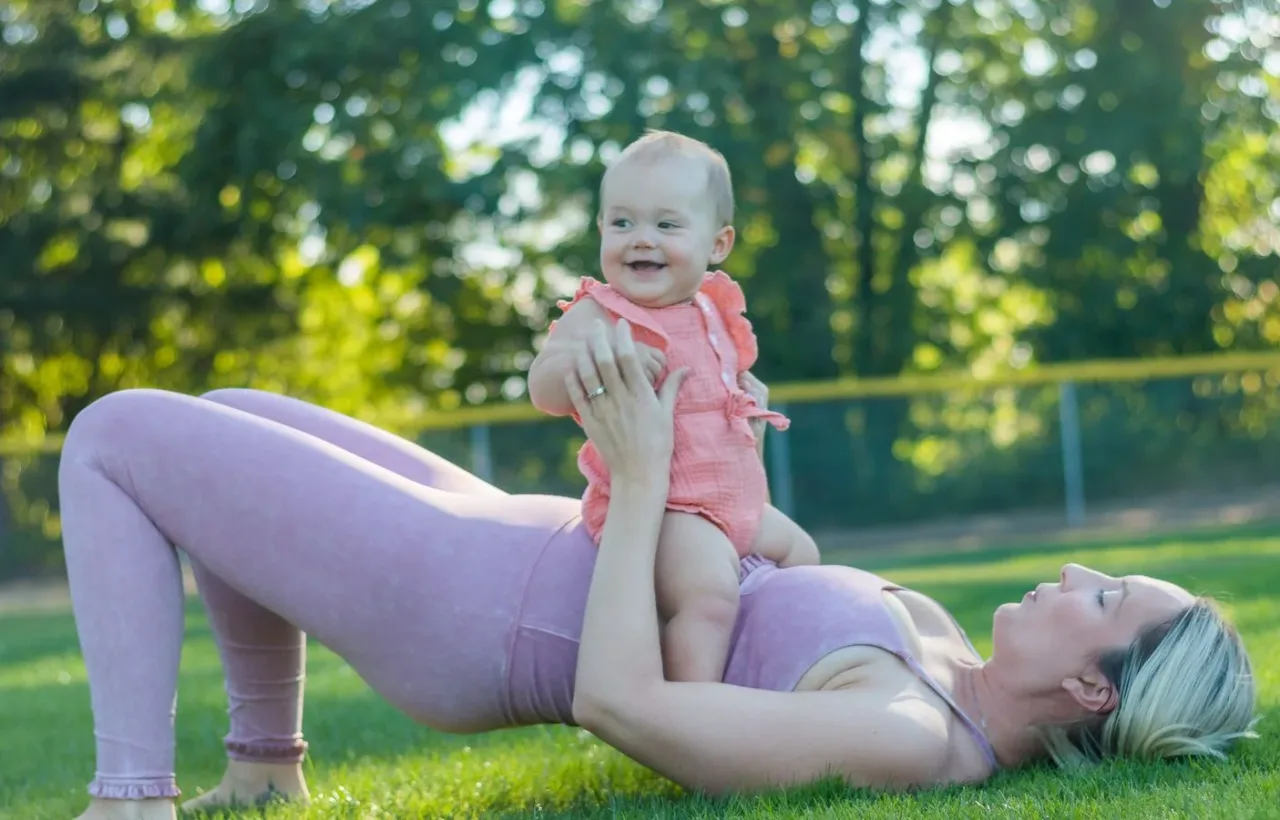

A postpartum workout at home should start with walking, breathing, and pelvic floor exercises, then build to low-impact strength work only as your symptoms and recovery allow. There is no single start date for everyone.
After a healthy pregnancy and an uncomplicated vaginal birth, the American College of Obstetricians and Gynecologists (ACOG) notes that many people can begin gentle exercise a few days after birth, as soon as they feel ready. After a cesarean birth, a tear, or complications, ask your clinician first when and how to start.
When Can You Start a Postpartum Workout at Home?
The safest start depends on your birth, not on a calendar alone. Recovery is symptom-guided: progress when movement feels steady and symptoms do not get worse during or after the session.
After an uncomplicated vaginal birth, a first session might be a short walk around your home or block, gentle breathing, and a few pelvic floor squeezes. That counts. It does not need to be a 30-minute workout.
After a cesarean birth, you have had major abdominal surgery as well as a birth. Walking as advised by your care team is usually the early focus, while lifting, loaded core work, and driving your heart rate up need individual clearance. The same applies if you had preeclampsia, heavy bleeding, infection, a third- or fourth-degree tear, or severe pelvic or back pain.
Your postnatal check, at around 6 to 8 weeks in NHS care, is a good point to review bleeding, pain, bladder control, abdominal separation, mood, and your plan to add harder exercise, according to the NHS guide to your post-pregnancy body. You do not have to wait until that check to ask for help if something feels wrong before it.
Safety note: This guide is general information, not medical advice for your birth. Stop and get medical advice promptly if exercise brings heavier or bright-red bleeding, chest pain, severe headache, fever, worsening incision pain, the incision opening, severe pelvic pain, or a new feeling of heaviness or bulging in the vagina. If you are unsure whether a symptom is normal, ask your midwife, doctor, or pelvic health physiotherapist before continuing.
What Changes After Birth, and Why It Changes the Exercises
Pregnancy stretches the abdominal wall and loads the pelvic floor for months. Birth adds recovery on top of that, while feeding, lifting, and broken sleep change how much energy you have on any given day.
The pelvic floor is the group of muscles around your bladder, vagina, and bottom. The NHS explains that strengthening these muscles can help with leaking urine and a heavy feeling, and that pelvic floor exercises can be done lying down, sitting, or standing. That is why they come before jumping, running, or heavy lifting in a sensible home plan: you need to be able to support pressure from below before you add pressure from impact or load.
Diastasis recti is a separation of the two muscles that run down the middle of your stomach. The NHS says this separation is common, is usually about two finger widths, and will usually go back to normal by the time the baby is 8 weeks old.
Regular pelvic floor and deep stomach muscle exercises can help reduce the size of the separation, but the NHS advises avoiding sit-ups, planks, and high-impact exercise to start with, and contacting the GP if the gap is still obvious at 8 weeks, because a physiotherapist may be able to give specific exercises.
Doming is a useful warning sign while you learn. If a ridge or bulge pushes out along the middle of your abdomen during a move, that move is currently asking more of your abdominal wall than you can control well. Make it easier, breathe out on the effort, or swap it for now.
Phase 1: Reconnect With Breathing and Your Pelvic Floor
Start here because breathing coordinates your deep stomach muscles and pelvic floor. When you breathe out and gently lift the pelvic floor as you move, you manage pressure better than if you hold your breath and brace hard.
Diaphragmatic breathing with a pelvic floor lift
Lie on your side or on your back with knees bent, if that is comfortable.
- Breathe in gently and let your ribs and belly soften.
- As you breathe out, squeeze and draw in your bottom as if holding in wind, and squeeze around your vagina and bladder as if stopping the flow of urine.
- Hold only while you can keep breathing, then fully relax.
The NHS pelvic floor guidance describes long squeezes held for no longer than 10 seconds and short, quick squeezes done until the muscles tire, building up to 10 repeats of each, at least 3 times a day. Build up to that. In the first days, 3 to 5 gentle repeats with full relaxation between them is a reasonable place to learn the feeling. Full relaxation matters because a pelvic floor that never lets go is not working well either.
Deep stomach muscle exercise
This is the NHS stomach exercise for toning the deep abdominal muscles, done on your side with knees slightly bent.
Breathe in gently. As you breathe out, draw in the lower part of your stomach as if narrowing your waist, squeeze your pelvic floor at the same time, hold for a count of up to 10 while breathing normally, then release. Repeat up to 10 times, stopping sooner if you lose the gentle contraction or start holding your breath.
Walking
Walk little and often first: around the room, to the end of the street, then a short loop. Increase the time only if bleeding does not increase, pain does not worsen, and pelvic heaviness does not appear later that day. A good test is how you feel that evening and the next morning, not just during the walk.
Phase 2: Add Low-Impact Strength for Daily Life
Once walking feels steady and your clinician has no concern about you adding strength work, train the movements you use with a baby: standing up, hinging to pick things up, pushing, pulling, and carrying. Keep the effort moderate at first. Moderate intensity means you are breathing harder but can still talk in short sentences, and you finish feeling worked, not wiped out.
Choose 4 to 5 exercises, do 1 to 2 rounds, and rest as needed. Start with 5 to 8 controlled repeats unless the exercise says otherwise.
| Exercise | How to do it at home | Why it helps |
|---|---|---|
| Sit-to-stand from a chair | Sit tall near the front of a sturdy chair, feet flat. Breathe out, lift the pelvic floor, and stand. Sit back down slowly. | Rebuilds leg and glute strength for getting up while holding your baby. Use a higher chair to make it easier. |
| Glute bridge | Lie on your back, knees bent, feet flat. Breathe out, lift the pelvic floor, and lift your hips until your body is in a straight line from knees to shoulders. Lower slowly. | Strengthens glutes and the back of the thighs without impact. Stop if you feel pelvic pressure or back pain. |
| Wall push-up | Hands on a wall at chest height. Bend your elbows to bring your chest toward the wall, then push away as you breathe out. | Rebuilds pushing strength with less load on the abdominal wall than a floor push-up or early plank. |
| Supported hinge | Stand holding a counter for balance, soft knees. Push your hips back a short distance with a flat back, then stand tall and squeeze your glutes. | Practices the pattern for lifting from the floor while protecting your back. Add load only later, and only if symptom-free. |
| Heel slides | Lie on your back, knees bent. Breathe out, lift the pelvic floor, and slowly slide one heel away, then bring it back. Alternate sides. | Trains deep abdominal control while one leg moves. Stop if your abdomen domes or your back arches hard. |
| Standing march in place | Stand tall holding support if needed. Lift one knee a few inches, lower it, then lift the other. | Builds hip strength, balance, and walking fitness with no jumping. |
Progress one thing at a time: one more repeat, a slightly lower chair, a slower lowering phase, or a second round. If leaking, heaviness, doming, pain, or increased bleeding shows up, that version is too much for today. Make it easier next time rather than pushing through.
Phase 3: Build Toward the CDC and WHO Activity Target, in Small Pieces
The long-term target is not a deadline for the early weeks. The CDC guidance for healthy pregnant and postpartum women recommends at least 150 minutes a week of moderate-intensity aerobic activity in the postpartum period, for example 30 minutes on 5 days, and notes that activity can be broken into smaller chunks and that some activity is better than none. The CDC also notes that postpartum activity can decrease symptoms of postpartum depression, and, combined with healthy eating, can help with weight loss after delivery.
The World Health Organization makes a similar recommendation in its postnatal care guidance: postpartum women without contraindication should do at least 150 minutes of physical activity through the week, include muscle-strengthening activities, start with small amounts, and increase frequency, intensity, and duration gradually, according to WHO recommendations on maternal and newborn care for a positive postnatal experience.
In practice, that might look like this for someone who has been cleared to build up and is symptom-free with Phase 2 work. It is an example, not a prescription:
| Day | Session | Time |
|---|---|---|
| Monday | Walk + sit-to-stand, bridge, wall push-up, heel slides | 20-30 minutes total |
| Tuesday | Walk, broken into 10-minute blocks if needed | 20-30 minutes total |
| Wednesday | Rest or gentle walk and pelvic floor work | As feels right |
| Thursday | Walk + hinge, march, bridge, wall push-up | 20-30 minutes total |
| Friday | Walk | 20-30 minutes |
| Saturday | Walk + strength circuit from Thursday | 25-35 minutes total |
| Sunday | Rest or gentle walk | As feels right |
You do not need equipment for this plan. A sturdy chair, a wall, a counter, and floor space are enough to start. A resistance band or light household objects can add load later, but only if you can breathe out on the effort, keep good control, and stay symptom-free.
Feed or pump before a session if that is more comfortable, wear a supportive bra, drink water, and stop for feeding or settling your baby whenever you need to. A split session still counts toward your day.
Running, jumping, heavy lifting, and hard core work belong at the end of this build, not the start. Add them one at a time, at low volume, after you can walk briskly, do the strength work above without symptoms, and have discussed a return to impact with your clinician or physiotherapist. There is no benefit in testing yourself with a run before those basics are solid.
Mistakes That Slow Recovery Down
- Doing crunches, sit-ups, and long planks first. The NHS advises avoiding sit-ups, planks, and high-impact exercise to start with if you have abdominal separation, because they place high demand on a healing abdominal wall. Earn them back later, without doming or pain.
- Holding your breath to finish a repeat. Breath-holding raises pressure in your abdomen and pushes down on the pelvic floor. Breathe out on the hardest part instead.
- Treating leaking or heaviness as something to ignore. Leaking when you cough, march, or lift, or a dragging feeling in the vagina, is information that the load is too high right now. Reduce it and ask for a pelvic health referral if it keeps happening.
- Jumping back to your pre-pregnancy workout. Your previous plan was built for a different body and a full night of sleep. Rebuild the base first, then add intensity.
- Exercising hard on very little sleep, then blaming yourself for a weak session. Fatigue changes balance, form, and recovery. On a rough night, a walk and pelvic floor work is a complete session.
- Chasing weight loss on a timeline. Activity may help with energy, mood, sleep, and strength, but postpartum weight change varies and is affected by feeding, sleep, and health as well as exercise. Use strength, stamina, and how daily tasks feel as your progress measures too.
Troubleshooting Common Problems at Home
You leak during a session
Make the exercise easier: reduce the range, slow down, use support, or remove impact. Breathe out and lift the pelvic floor just before the effort. If leaking persists with low-impact work, ask your doctor or midwife for a pelvic health physiotherapy referral rather than simply doing more squeezes on your own.
Your abdomen domes during bridges or heel slides
Shorten the movement, bend the moving leg less, or lift your hips lower. If doming continues at the easiest version, leave that exercise out for now and focus on breathing, pelvic floor work, walking, sit-to-stands, and wall push-ups. Get individual advice if doming is still a regular problem as the weeks pass.
Your cesarean scar feels tight or sore afterwards
Soreness that increases during the day or soreness still worse the next day means the session was too much. Cut the volume in half, avoid loaded bending and twisting for now, and check your scar care and lifting limits with your care team. New redness, oozing, opening, fever, or sharply increasing pain needs medical advice, not a modified workout.
Your back aches when feeding and lifting
Set up feeding with your back supported and your feet on the floor, as the NHS suggests, and keep your back straight and bend your knees when lifting. In workouts, the supported hinge and sit-to-stand help because they teach you to use your legs and glutes instead of rounding and pulling with your back.
Postpartum Workout Questions, Answered Straight
Can I do a postpartum workout at home while breastfeeding?
In general, moderate exercise and breastfeeding can fit together, and many people find a session more comfortable after feeding or pumping. Drink water, eat enough to support recovery and feeding, and talk to your clinician or lactation support if you have pain, blocked ducts that keep returning, or concerns about supply. This is an area to get personal advice for, not to push through discomfort.
When can I run again?
There is no one week that is right for everyone. A safer order is walking, then brisk walking, then low-impact strength without leaking, heaviness, pain, or doming, then a gradual walk-and-jog build only after discussion with your clinician or physiotherapist. If running brings symptoms, return to the last step that was symptom-free.
Will exercise close my diastasis recti?
Exercise can help. The NHS says regular pelvic floor and deep stomach muscle exercises can help reduce the size of the separation, which usually goes back to normal by 8 weeks. If the gap is still obvious at 8 weeks, contact the GP, who can refer you to a physiotherapist for specific exercises. Progress is also about function, not only finger width: can you lift, walk, and carry without doming, pain, or pelvic symptoms?
What if I had a cesarean birth?
Start with walking and the recovery steps your surgical team gave you, and ask them when you can add strength work, lifting, and core exercises. Your abdominal wall and scar need time, and your limit for lifting in the early weeks may be lower than a home workout assumes. Use your postnatal check to get a clear progression rather than guessing.
Do I need a special program or equipment?
No. You need a plan that matches your birth and symptoms, a chair and wall, and a way to make each move easier or harder. A paid program is only useful if it gives you that same gradual, symptom-guided progression and a route to professional help when you need it.
What if I am months postpartum and never did Phase 1?
Start there anyway. Spend one to two weeks on breathing, pelvic floor coordination, walking, and the easiest strength versions, then progress as above. Beginning with the base work often explains why later exercises felt uncomfortable, and it gives you a clear baseline to build from.
Related Home Workouts
How This Guide Was Put Together
This guide is based on the CDC physical activity guidance for postpartum women, the WHO postnatal care recommendations on physical activity, and NHS advice on the post-pregnancy body, pelvic floor exercises, and separated stomach muscles, all linked above. It does not claim testing, personal results, or expert review, and it does not replace advice from your own clinician or physiotherapist.
Sources
- Centers for Disease Control and Prevention, Pregnant & Postpartum Activity: An Overview, linked above
- National Health Service, Your Post-Pregnancy Body, linked above
- World Health Organization, WHO Recommendations on Maternal and Newborn Care for a Positive Postnatal Experience, physical activity recommendation 22, linked above


