
Back training is the part of home fitness that quietly goes missing. Most home exercises push or squat, back muscles mostly pull, and pulling wants a bar you probably do not own. So the back gets skipped — until posture, shoulder discomfort, or a stalled training plan makes the gap obvious. A back workout at home needs no bar at all: any sturdy waist-height edge becomes a row, and the floor handles the extension work that supports your lower back. Here is what your back needs, how to train each piece at home, and the safety rules that keep improvised pulling honest.
What Your Back Actually Needs From Training
Back training at home covers three jobs, and skipping any one leaves a specific weakness:
- Horizontal pulling — the mid-back and lats, trained with rows. This is the biggest gap in home routines and the one that most affects posture and shoulder health.
- Spinal extension — the muscles along your spine, trained with prone lifts like the superman. These muscles keep your trunk sturdy during everything else you do.
- Scapular control — the upper-back muscles that move and steady your shoulder blades, trained with slow, precise movements. This is the layer that makes shoulders feel healthy.
The classic home mistake runs in one of two directions: rows-only training that leaves the lower-back support untrained, or floor work only, which never provides pulling resistance. Cover all three weekly and the back is genuinely trained.
| Job | Main muscles | Home exercises | In the 25-minute session |
|---|---|---|---|
| Horizontal pulling | Mid-back, lats | Table, towel and backpack rows | Two row exercises, 10–12 reps each |
| Spinal extension | Muscles along the spine | Supermans, bird dog | Superman (8–10 reps or a 15 s hold) and bird dog |
| Scapular control | Upper back, shoulder-blade muscles | Wall slides, prone Y and T raises, reverse snow angels | Snow angels or Y raises, plus wall slides |
Pulling Without a Bar: Three Row Options
All three options are rows — you pull your chest toward a fixed edge, with your body angle setting the difficulty. More horizontal means harder:
- Table row: lie under a sturdy table, grip the edge with an overhand grip, and pull your chest up to it. Test the table’s stability with partial effort before trusting it fully.
- Towel row: drape a thick towel over a closed, latched door that opens away from you, grip both hanging ends, lean back with straight arms, and pull yourself upright. Check the door is secure before every set.
- Backpack row: load a backpack with books and hold one strap in each hand or the top handle with both. Hinge forward with a flat back and pull the bag to your ribs, elbows brushing your sides. Also works with one arm at a time, which is forgiving on the lower back.
Grip flips the emphasis: an overhand grip leans on the upper back, an underhand grip brings in the lats and biceps, and a neutral grip splits the difference. Rotating grips across a session is free variety that trains the whole map.
The Extension Family: Training the Lower Back
These floor exercises build the muscles along your spine — the ones that hold your trunk steady during every row, squat, and carry. Range starts small on purpose:
- Alternating superman: lie face down, lift one arm and the opposite leg a few inches, hold for a second, switch sides. The gentlest entry point.
- Superman hold: lift both arms and both legs slightly and hold for 10 to 20 seconds, breathing steadily. Keep the neck long — look at the floor, not the wall ahead.
- Reverse snow angels: face down, arms by your sides, sweep them slowly overhead along the floor and back. Excellent for the mid-back and shoulders together.
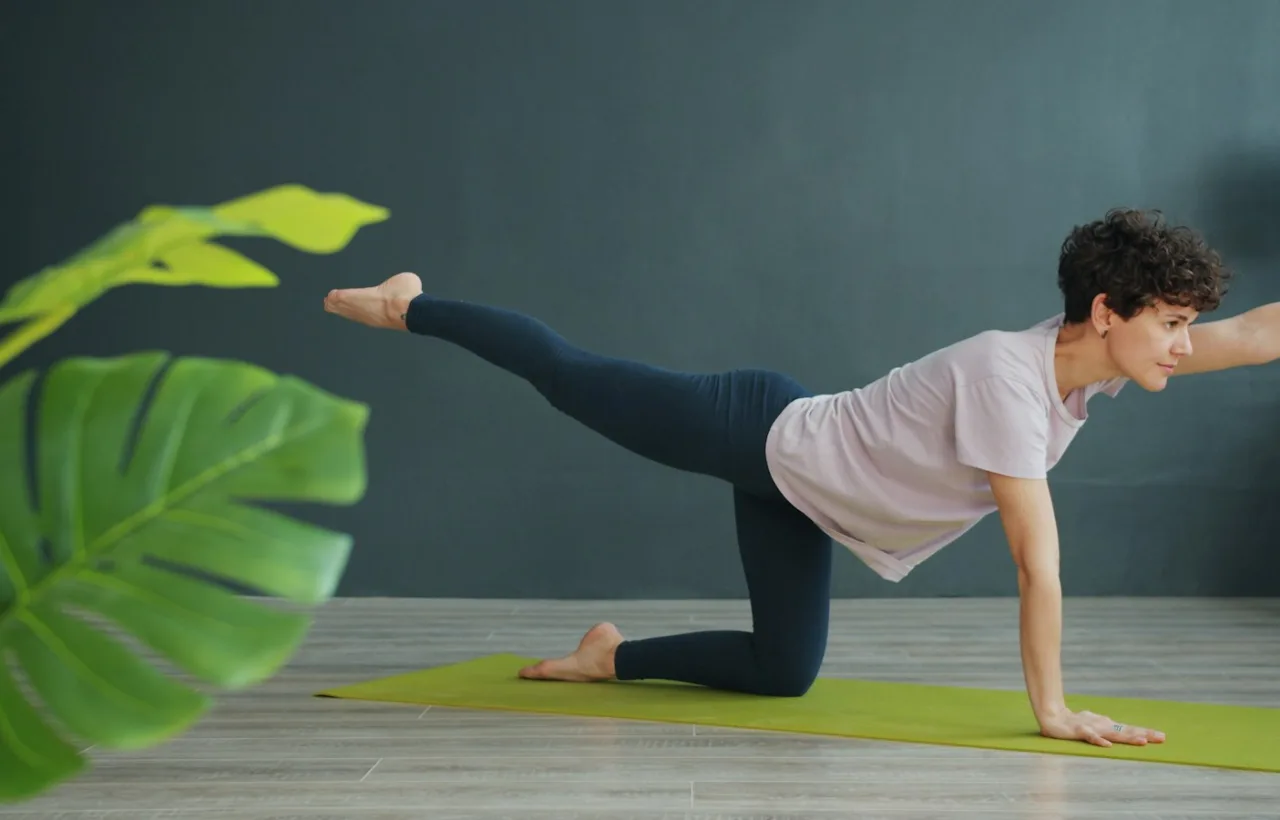
- Bird dog: on all fours, extend the opposite arm and leg while keeping your hips level. It trains the same muscles as the superman with less lower-back extension, which makes it useful if supermans aggravate your back.
Upper-Back and Posture Work: Scapular Control
This work is low-effort, high-value, and can be sprinkled through a week rather than confined to one session:
- Wall slides: stand with your back against a wall, arms bent at 90 degrees and touching the wall, slide them overhead and back down while keeping contact. If your lower back arches, stay in the range you can control.
- Prone Y raises: face down, arms overhead at a Y, lift them a few inches and lower slowly. Small movement, serious burn in the upper back.
- Prone T raises: the same idea with arms straight out at a T. Do both versions for the full upper-back spread.
One honest note on posture: no exercise undoes hours of sitting by itself. Strength work plus regular movement breaks — standing up every 30 to 45 minutes — does more for how you carry yourself than any single drill.
A Complete 25-Minute Back Session
Three rounds, resting about a minute between exercises. Slow lowering on everything:
- Row from your first anchor — 10 to 12 reps
- Reverse snow angels or prone Y raises — 10 to 12 reps
- Alternating superman or superman hold — 8 to 10 reps or a 15-second hold
- Row from your second anchor or grip — 10 to 12 reps
- Bird dog — 8 reps per side
- Wall slides — 10 slow reps
Two or three of these per week fits naturally at the end of an upper-body day or on its own. If you train push patterns regularly, every push session should be balanced with pulling volume like this — push and pull in roughly equal doses.
Exercise and Back Health: What the Evidence Says
Backed by research
What reviews and guidelines say
- A 2021 Cochrane review of 249 trials found moderate-certainty evidence that exercise is more effective than no treatment for chronic low back pain.Source: Hayden JA et al. (2021). Exercise therapy for chronic low back pain. Cochrane Database Syst Rev
- UK guidance from NICE recommends considering a group exercise programme for people with a flare-up of low back pain. Exercise is part of standard care, not something to avoid.Source: NICE guideline NG59: Low back pain and sciatica in over 16s
- The NHS recommends strengthening activities that work all major muscle groups, including the back, on at least 2 days a week.Source: NHS: Physical activity guidelines for adults aged 19 to 64
These sources describe general findings. If you have back pain now, follow your clinician’s advice first.
Rules That Keep Back Training Safe
- Test every anchor gently first. Tables, doors, and backpack straps get a partial-effort test set before a real one. If anything shifts, flexes, or creaks, choose a different option.
- Brace during rows. Keep your spine neutral, abs gently braced, and avoid jerking your torso to move the resistance.
- Start extension work small. A few inches of lift done slowly beats a big arch. Add range before adding repetitions.
- Keep the neck neutral in all prone work. The neck follows the spine; it never leads it.
- Know your stop signal. Sharp, pinpoint back pain during any exercise means stop and find a variation that does not produce it. If you have a history of back injury or ongoing pain, get professional guidance before starting extension work.
Safety note: This article is general fitness information, not medical advice. If you have an injury, a heart or blood-pressure condition, are pregnant or postpartum, or have not exercised in a long time, check with a doctor or physiotherapist before starting. Stop and get advice if you feel chest pain, dizziness, unusual breathlessness, or sharp joint pain. If you have a history of back injury or ongoing pain, get professional guidance before starting extension work such as supermans.
How Often Should You Train Your Back at Home?
Pulling is strength work and follows the usual rhythm: two or three sessions a week with a day between them. Extension work of the superman family fits the same schedule. Scapular drills are low enough in effort to do more often — a set of wall slides between meetings is a legitimate use of two minutes. The one pattern to avoid is isolation: back work scheduled only in your intentions, never in your week.
Back Training Questions
Can you train your back with no equipment at all?
Partially. Prone exercises — supermans, prone raises, snow angels — train the spine and upper back without anything, and bird dogs cover the deep support work. Pulling, however, needs resistance: with zero anchors available, a loaded backpack (or even a bag of books pulled close to the body) is the minimum honest tool. A bag and any horizontal edge unlock the full routine.
Are supermans safe for the lower back?
For healthy backs, controlled supermans are a standard and useful strengthening exercise. The rules that keep them safe: start with alternating-arm-and-leg versions, lift a few inches rather than as high as possible, keep the neck neutral, and move slowly. If an acute or recurring back condition is part of your story, clear extension work with a professional first.
Why does my lower back tire out during rows?
Usually because the position is doing more work than the muscles you intended: a very horizontal body angle is a lower-back endurance test. Practical fixes: raise the anchor or lower your feet position so your torso is more upright, brace your abs during every rep, and shorten the sets. Endurance in that position builds over weeks.
How long does posture improvement take?
Honestly: posture is a mix of strength, daily habits, and individual structure, so timelines are personal rather than promiseable. What is predictable: upper-back strength builds in a few weeks, and movement breaks reduce the stiffness that makes posture feel worst. Think in months of consistent minor effort, not days.
Can you train your back every day?
The posture-style drills — wall slides, prone raises — are gentle enough to practice most days. Rows and loaded supermans are strength training and want recovery days between sessions. If you want a daily back habit, make it the low-effort scapular work and keep the heavy pulling at two or three sessions per week.
How this guide was put together: This guide was written to cover all three jobs of the back without a pull-up bar. Exercise selection, weekly volume and progression rules follow published guidance, mainly the WHO 2020 physical activity guidelines and the American College of Sports Medicine position stand on resistance training, plus the studies linked in this article. Last reviewed October 2026.