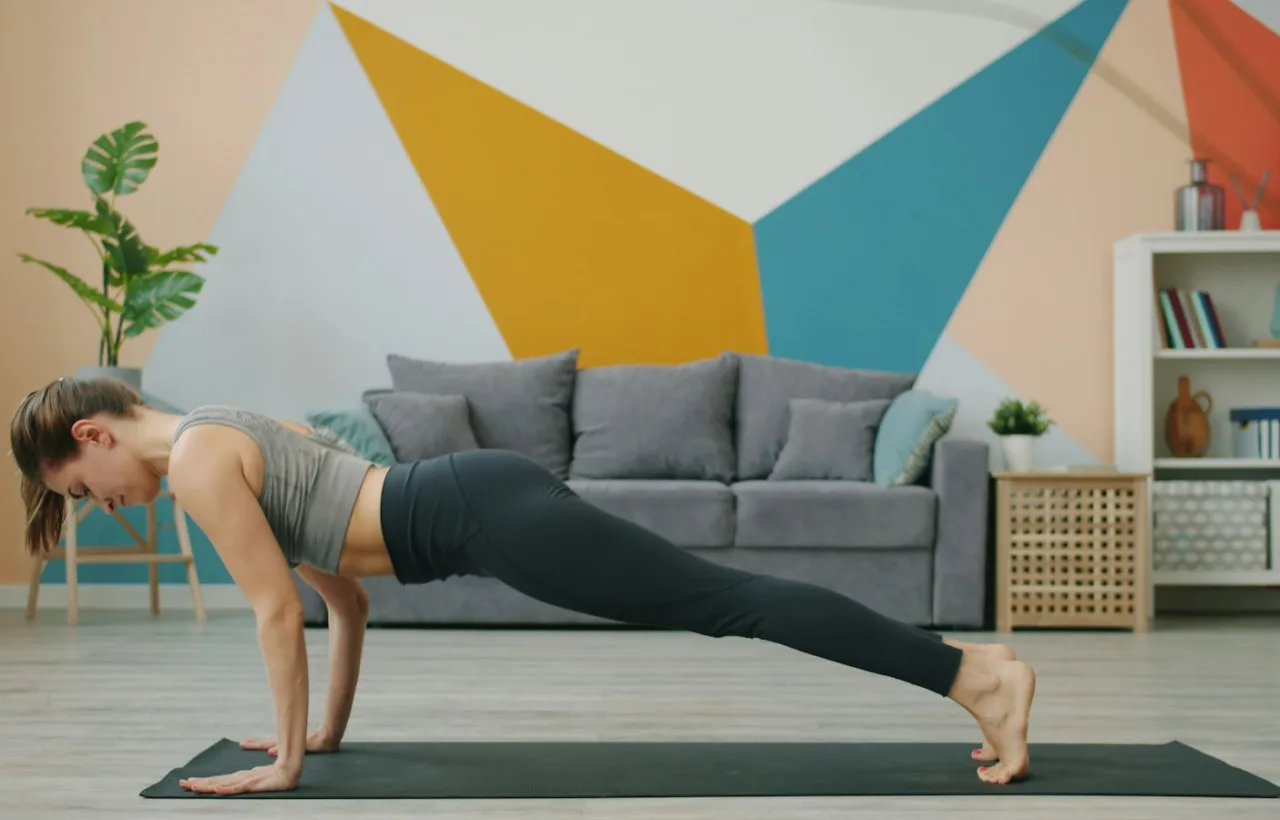

A good core workout at home is not a longer crunch session. Your core is the ring of muscle that wraps your entire midsection — front, sides, and back — and its day job is resisting movement so your spine stays safe while your arms and legs do the work. Training those muscles means training positions, not rep counts. This guide covers the three jobs a strong core actually needs to do, a complete exercise menu you can start tonight, a 10-minute circuit, and honest answers about abs, frequency, and planking.
What Core Really Means — and Why Crunches Are Not Enough
Crunches train one narrow job: curling your torso forward. Your core spends most of the day doing the opposite — keeping your trunk still while forces try to bend, twist, or tip it. That is why people who crush hundreds of crunches can still fold like a lawn chair under a heavy carry: they trained motion, not stability.
Stability training needs no equipment. It needs positions held with intent, and progressions that make each position harder.
The Three Jobs of a Strong Core
- Anti-extension — resisting arching backwards. The front line of your core. Trained by planks, dead bugs, and hollow holds. This is the job that protects your lower back.
- Anti-rotation — resisting twisting. Trained by bird dogs, slow mountain climbers, and pressing a towel against a wall while trying to turn. This is the job that transfers force in sport and daily life.
- Anti-lateral flexion — resisting tipping sideways. Trained by side planks and the loaded backpack carry. This is the job most home routines miss completely.
Hit all three weekly and your core is genuinely covered. Miss one and the gap shows up as low-back fatigue long before any mirror shows it.
| Job | What it resists | Train it with | Often missed? |
|---|---|---|---|
| Anti-extension | Arching backwards | Front plank, dead bug, hollow hold | Rarely |
| Anti-rotation | Twisting | Bird dog, slow mountain climbers, towel press | Sometimes |
| Anti-lateral flexion | Tipping sideways | Side plank, one-side backpack carry | Most often |
Cover all three jobs each week and your core is genuinely trained.
The Home Core Menu
Pick two or three per session at first. Every one has an easier and harder direction:
- Front plank: elbows under shoulders, glutes squeezed, one line from head to heels. Easier: knees down or forearms on a couch. Harder: feet on a chair.
- Side plank: elbow under shoulder, hips stacked and lifted. Easier: bottom knee down. Harder: top leg raised.
- Dead bug: on your back, arms and knees up, press your lower back into the floor, then extend one arm and the opposite leg slowly without letting the back arch. The best beginner anti-extension move there is.
- Bird dog: on all fours, extend the opposite arm and leg slowly without rocking your hips. Imagine balancing a cup of water on your lower back.
- Hollow hold: on your back, lift shoulders and legs slightly, back pressed flat. Easier: keep the knees bent. Harder: legs straighter and lower.
- Slow mountain climbers: from a push-up position, bring each knee forward deliberately, hips dead still. Slow beats fast here — speed turns it into cardio with sloppy positioning.
- Loaded backpack carry: walk a slow lap holding a backpack of books on one shoulder, then switch. Your side line will make itself known within 30 seconds.
A 10-Minute Core Circuit
Two or three rounds, moving from one exercise to the next with about 45 seconds of rest between rounds. Quality beats duration everywhere in this list — when a position breaks down, the set is over:
- Dead bug — 8 slow reps per side
- Side plank — 20 to 30 seconds per side
- Bird dog — 8 slow reps per side
- Front plank — 30 to 45 seconds
- Glute bridge march — 10 slow reps per side
- Hollow hold — 15 to 20 seconds
Most people can fit this at the end of any workout, or on its own on a rest day. It is deliberately short: the exercises are intense enough that 10 focused minutes twice a week outperforms 30 sloppy ones.
How Often Should You Train Core at Home?
Two or three dedicated sessions a week is plenty. Your core also gets meaningful work from squats, push-ups, rows, and carries, so it is rarely starting from zero. Daily low-effort practice — holding an easy plank or a few dead bugs — is fine and useful for coordination, but hard, to-the-limit core work deserves recovery days like any other training.
Core Training: What the Evidence Supports
Backed by research
What studies say about core training
- A review of core stability training for injury prevention recommends programs built on muscle activation, neuromuscular control, static stabilization and dynamic stability: the same mix of holds and controlled movements in the menu above.Source: Huxel Bliven KC, Anderson BE (2013). Core stability training for injury prevention. Sports Health
- In a controlled trial, six weeks of abdominal exercise alone did not reduce abdominal fat, though it did improve abdominal muscular endurance. Visible abs depend on overall body fat, not on ab exercises.Source: Vispute SS et al. (2011). The effect of abdominal exercise on abdominal fat. J Strength Cond Res
- The NHS recommends strengthening activities for all major muscle groups, including the abdomen and back, on at least 2 days a week.Source: NHS: Physical activity guidelines for adults aged 19 to 64
Common Core Mistakes That Waste the Work
- Chasing reps. Twenty fast, sloppy crunches train endurance in a bad position. Eight slow, braced reps train the muscle you actually want.
- Planking by timer. A sagging five-minute plank is a lower-back exercise. A perfect 30-second plank is a core exercise. When the position dies, the set died.
- Sagging hips. The telltale sign that the set should end — watch for it in photos or a mirror check.
- Ignoring the sides and back. Front planks and crunches are the easy half. Side planks, carries, and bird dogs are the half that keeps spines happy.
- Holding your breath. Breathe through every hold. If you cannot breathe in position, the position is too hard — scale it.
- Confusing soreness with results. Sore abs mean novelty, not progress. More controlled seconds and harder positions are the scoreboard.
Core Training Myths and Questions
How long does it take to see abs?
Visible abs are mostly a function of overall body-fat level, which is driven by how you eat and how much you move — not by how many core exercises you do. Core training builds the muscle underneath, and it deserves a spot in any plan, but no core workout alone determines when or whether abs become visible. Timelines vary too much between people to promise a number.
Is it bad to plank every day?
Easy, well-performed practice daily is fine. Genuinely hard sets — the last reps you can hold without breaking position — benefit from the same 48-hour recovery rhythm as other strength training. If your form degrades day to day, you are not recovering.
Planks or crunches — which should I choose?
Planks and the anti-movement family cover more of the core’s real job, so make them the base. Crunches are a reasonable side dish for people who enjoy them. Neither is mandatory; skip neither side planks nor carries if you want the complete package.
Do you need equipment for a core workout at home?
No. The entire menu above runs on a floor and a wall. One loaded backpack adds the carry and makes harder holds possible, but nothing in the circuit requires it.
How this guide was put together: This guide was written to train the core the way it works in daily life: by resisting movement. Exercise selection, weekly volume and progression rules follow published guidance, mainly the WHO 2020 physical activity guidelines and the American College of Sports Medicine position stand on resistance training, plus the studies linked in this article. Last reviewed October 2026.
Safety note: This article is general fitness information, not medical advice. If you have an injury, a heart or blood-pressure condition, are pregnant or postpartum, or have not exercised in a long time, check with a doctor or physiotherapist before starting. Stop and get advice if you feel chest pain, dizziness, unusual breathlessness, or sharp joint pain. If you have a history of back problems, start with the easier version of each exercise and stop if pain increases.


