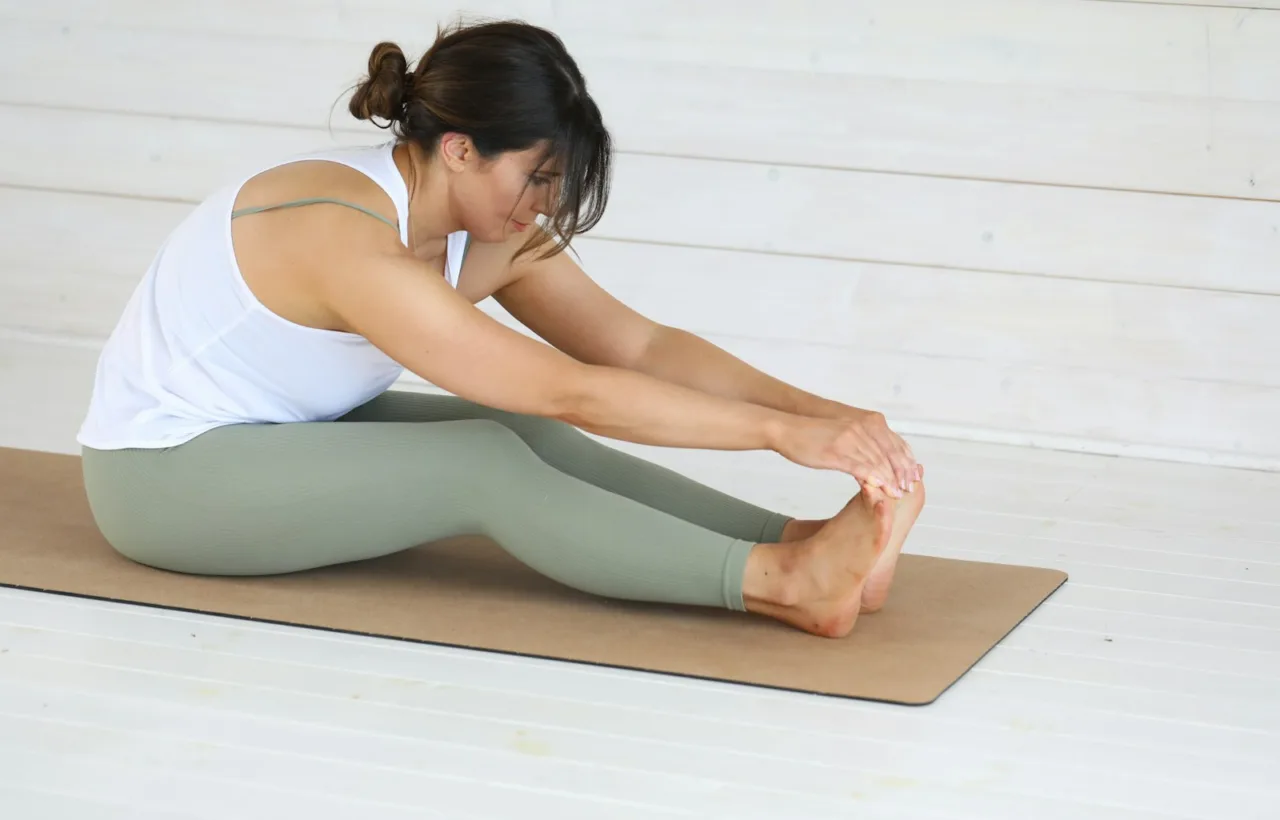

An at-home Pilates workout uses controlled, low-impact exercises that strengthen your core, improve posture, and increase flexibility using minimal or no equipment. You can start with just a mat and 20 minutes, making it one of the most accessible strength-training methods for people who want results without a gym membership or heavy weights.
This guide walks you through everything you need to begin: the essential movements, how to set up your space, a simple starter routine, and how to progress safely. By the end, you'll know exactly what to do in your first session and how to build from there.
Why Pilates Works Well at Home
Pilates was designed around controlled bodyweight movements, so most exercises require nothing but floor space. Unlike weightlifting or machines, you don't need specialized equipment to see real improvements in strength and stability. The method focuses on precision and alignment rather than repetition count, which means you can learn proper form without a trainer watching every rep.
The core principles—controlled breathing, core engagement, and deliberate movement—translate well to home practice because they rely on internal awareness rather than external feedback. You learn to feel whether a movement is working the right muscles, which builds independence quickly.
That said, home workouts do require self-discipline. There's no instructor cueing you through transitions or correcting your form in real time, so you'll need to start with foundational moves and progress methodically.
What You Actually Need
A yoga or exercise mat provides cushioning for your spine during floor exercises. Standard thickness (around 6mm) works for most people; if you have sensitive joints, go slightly thicker.
Optional but useful additions:
- Resistance band: adds challenge to leg and arm exercises once bodyweight feels easy
- Small pillow or folded towel: supports your head or cushions your tailbone during certain positions
- Non-slip socks or bare feet: grip matters more than cushioning
You do not need a reformer, Pilates ring, or any branded equipment to start. Commercial studios use that gear for variety and resistance options, but the foundational mat exercises deliver results on their own.
The Five Movements Every Beginner Needs
These form the foundation of nearly every Pilates routine. Master the setup and breathing pattern for each before adding repetitions or variations.
The Hundred
Lie on your back, knees bent, feet flat. Lift your head and shoulders off the mat, reach your arms long by your sides, and pump them up and down in small pulses. Breathe in for five pumps, out for five pumps. This warms up your core and teaches you to stabilize your spine while moving your limbs.
Common mistake: lifting your shoulders too high and straining your neck. Keep your gaze on your thighs, not the ceiling, and if your neck tires, rest your head down between sets.
Pelvic Curl (Bridge)
Lie on your back, knees bent, feet hip-width apart. Press through your heels to lift your hips toward the ceiling, peeling your spine off the mat one vertebra at a time. Pause at the top, then roll back down with the same control. This teaches spinal articulation and glute activation, both essential for back health.
Why it matters: most people lift their hips as one rigid block. The goal here is segmental movement, which builds the control you need for more advanced exercises.
Single-Leg Stretch
Lie on your back, lift your head and shoulders, and bring one knee toward your chest while extending the other leg long at a 45-degree angle. Switch legs in a smooth rhythm, keeping your core pulled in so your lower back stays anchored to the mat. This challenges stability while your limbs move in opposite directions, a core skill in Pilates.
Setup tip: the lower your extended leg, the harder your core has to work. Start with your leg higher (closer to the ceiling) until you can keep your back flat throughout.
Spine Stretch Forward
Sit tall with legs extended in front of you, feet flexed, slightly wider than hip-width. Reach your arms forward at shoulder height. Exhale and round your spine forward, reaching your hands past your feet, then inhale to roll back up to tall sitting. This stretches your hamstrings and back while reinforcing the C-curve shape your spine makes in many Pilates exercises.
Swan (Modified Cobra)
Lie on your stomach, hands under your shoulders. Press into your hands to lift your chest off the mat, keeping your hips down and your gaze slightly forward. Lower back down with control. This strengthens the muscles along your spine and counters the forward-bending bias of most daily activities.
Safety note: if you have lower back pain, lift only a few inches and focus on lengthening your spine rather than arching high.
Your First 20-Minute Routine
Do this three times per week, with at least one rest day between sessions. Each exercise takes about 2–3 minutes including setup and rest.
- Breathing and centering (2 minutes): Lie on your back, knees bent, and practice inhaling through your nose into your ribcage, then exhaling fully through your mouth. Feel your abs pull in on the exhale.
- Pelvic Curl (10 reps): Focus on smooth, controlled movement rather than speed.
- The Hundred (50 arm pumps, or as many as you can with good form): Rest your head if needed.
- Single-Leg Stretch (10 per leg, alternating): Keep transitions smooth.
- Spine Stretch Forward (8 reps): Exhale as you round forward, inhale as you return.
- Swan (6 reps): Lift only as high as you can without straining your lower back.
- Side-lying leg lifts (10 per leg): Lie on your side, lift your top leg hip-height, lower with control. This targets the outer hip and builds lateral stability.
- Child's Pose stretch (1 minute): Sit back on your heels, reach your arms forward, and rest.
Track how each exercise feels. If something causes pain (not just effort or muscle fatigue), stop and reassess your form or skip that exercise until you've checked your setup.
| Exercise | Reps or time | What it trains |
|---|---|---|
| Breathing and centering | 2 min | Breathing pattern and core engagement |
| Pelvic curl | 10 reps | Spinal control and glutes |
| The Hundred | Up to 50 arm pumps | Core endurance and stability |
| Single-leg stretch | 10 per leg | Core stability while the legs move |
| Spine stretch forward | 8 reps | Back and hamstring mobility |
| Swan | 6 reps | Back extensors |
| Side-lying leg lifts | 10 per leg | Outer hip |
| Child’s pose | 1 min | Recovery stretch |
Three sessions a week, with a rest day between them.
How to Progress Without Injury
Add challenge in this order: control first, then range of motion, then repetitions, then resistance or variations. A common mistake is jumping to advanced versions too soon, which leads to compensation (using the wrong muscles) and strain.
After two weeks of the starter routine, you can:
- Extend the hold time in static positions like the Hundred
- Lower your legs closer to the floor in Single-Leg Stretch
- Add a resistance band for leg lifts or arm exercises
- Introduce small props like a Pilates ball for added instability
Red flags that you're progressing too fast: lower back pain, neck strain, or feeling the work in your hip flexors instead of your core during leg exercises. These signal that stabilizing muscles aren't keeping up with the challenge you've added.
Mistakes That Stall Progress
Holding your breath: Pilates uses breath to support movement. If you forget to breathe, your muscles tense and you lose the fluidity that makes the method effective. Inhale to prepare, exhale during the effort.
Rushing through reps: ten slow, controlled repetitions build more strength and coordination than twenty fast ones. If you can't move smoothly, the exercise is too hard or your setup is wrong.
Skipping the setup cues: "pull your navel to your spine" and "lengthen your spine" aren't filler—they're the instructions that make the exercise work the right muscles. Pilates results come from how you do the movement, not just that you did it.
Ignoring one side: if one leg or arm feels weaker or shakier, that's normal and valuable information. It means you've found an imbalance to address, not a reason to avoid that side.
What the Research Says About Pilates at Home
A 2016 meta-analysis of randomized trials in healthy adults found that Pilates done two to three times a week for 5 to 12 weeks improved abdominal muscular endurance compared with no exercise. The benefits appear similar whether you train in a studio or at home, as long as you maintain proper form and progress gradually.
A 2023 systematic review in Musculoskeletal Care found that Pilates helped reduce pain in chronic low back pain, with no strong evidence that any one type of exercise is better than another. The key factor was consistency and attention to technique, not the presence of equipment.
For healthy adults, Pilates is considered low-risk. However, if you have osteoporosis, spinal injuries, or recent surgery, consult a physical therapist before starting. Some exercises involve spinal flexion (rounding forward) which may not be appropriate for certain conditions.
Space and Time Setup
You need roughly six feet by three feet of clear floor space—enough to lie down and extend your arms and legs without hitting furniture. A quiet room with minimal distractions helps you focus on form, especially when you're learning new movements.
Most people find early morning or late evening works best for home practice, simply because the space is more likely to be free and interruptions are fewer. Twenty minutes is enough for a meaningful session; you don't need an hour to see results.
If you live with others, close the door or let them know you're not available for those twenty minutes. Pilates requires concentration, and constant interruptions break the mind-body connection that makes it effective.
Pilates Questions From Beginners
How soon will I see results?
Most people notice better posture and less stiffness within two to three weeks of consistent practice. Measurable strength and endurance gains usually take several weeks of regular practice, and Pilates trials have typically run for 5 to 12 weeks at two to three sessions per week. (source: Campos RR et al., 2016, J Sports Med Phys Fitness)
Can I do Pilates every day?
Yes, but daily practice works best once you've built a foundation and can vary your routine to target different muscle groups. Beginners benefit more from three times per week with rest days for recovery and adaptation.
Do I need to be flexible to start?
No. Pilates actually improves flexibility over time by moving your joints through their full range of motion in a controlled way. Start where you are and the range will increase as you practice.
Is Pilates enough, or do I need other exercise?
Pilates builds core strength, stability, and flexibility, but it doesn't provide significant cardiovascular conditioning or heavy resistance training. For overall fitness, pair it with activities like walking, cycling, or swimming, and consider adding strength work for your upper body if those muscles aren't challenged enough by your routine.
What if my back hurts during an exercise?
Stop immediately. Pain signals that something is wrong with your form, your setup, or the appropriateness of that exercise for your body right now. Lower back pain during core exercises usually means you're arching your spine instead of keeping it neutral, or the exercise is too advanced. Go back to simpler variations and build up gradually.
How This Guide Was Put Together
This guide is based on foundational Pilates principles as taught in instructor certification programs, general exercise science on strength and flexibility development, and peer-reviewed research on Pilates outcomes. The routine and progression guidelines reflect standard beginner programming used in group mat classes and home practice resources.


